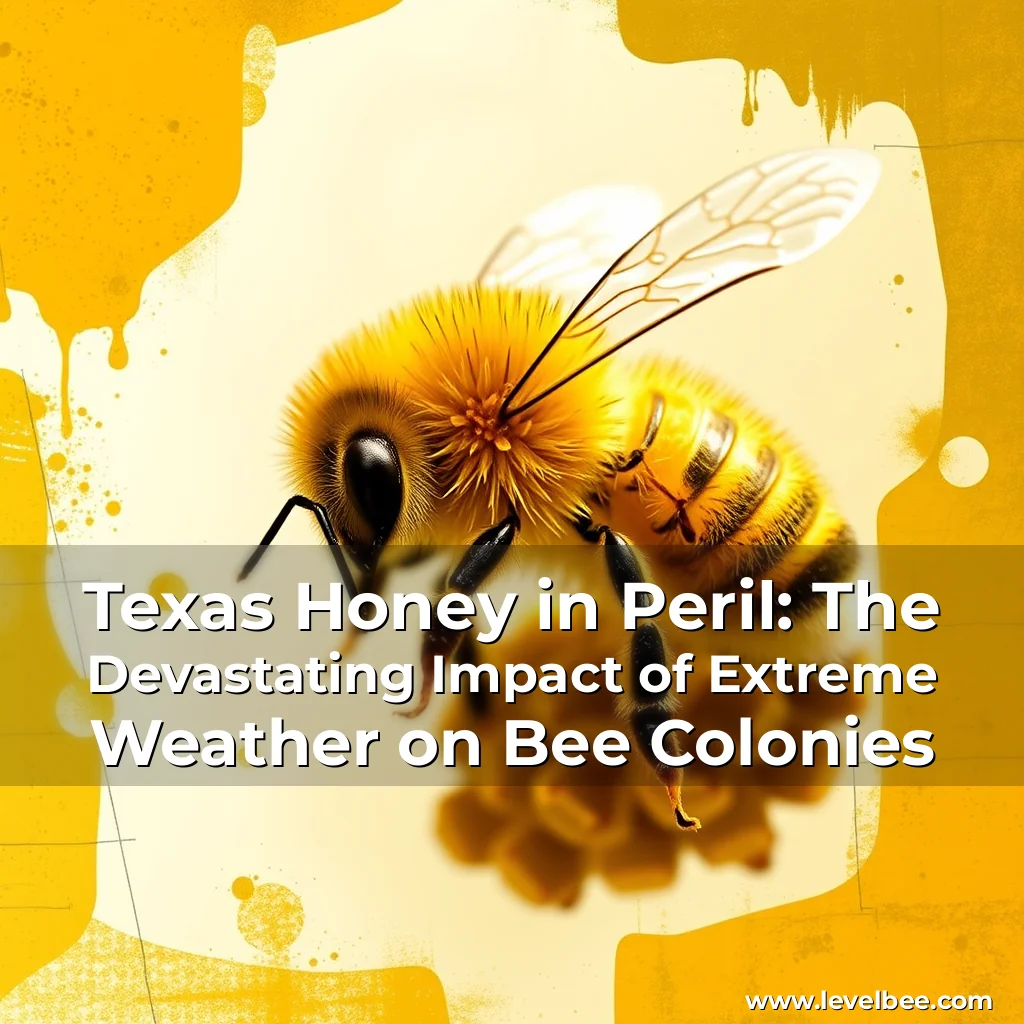
The world of Texas honey is in crisis. While the state is renowned for its rich honey production, a combination of severe weather patterns and declining plant life is putting the future of beekeeping in jeopardy. As the state’s bee population continues to dwindle, the prospect of a sweet, local honey becomes increasingly uncertain.
A devastating 66% decrease in bee colony populations has been reported in Texas since June, far exceeding the normal acceptable range of loss. This alarming trend has beekeepers and experts scrambling to find a solution, as the consequences of inaction could be catastrophic.
So, what’s behind this alarming decline? The answer lies in the extreme weather patterns that have been plaguing Texas in recent months. The state’s unique combination of hot summers and freezing winters has been disrupting the delicate balance of plant life, leading to a reduction in nectar production. Bees rely heavily on nectar to produce honey, and without it, the very foundation of their existence is threatened.
The situation is not new, however. Following the severe freeze in 2021, Texas beekeepers witnessed a 34% decline in bee populations from April 2021 to April 2022. While this was a significant loss, the current crisis is even more dire. The prolonged drought and extreme weather swings are taking a devastating toll on the state’s bee colonies, leaving many to wonder if the production of Texas honey will ever recover.
**Key Factors Contributing to the Decline in Bee Populations:**
- Extreme weather swings, including hot summers and freezing winters
- Reduced nectar production due to disrupted plant life
- Prolonged drought and water scarcity
- Colony stress and disease
The consequences of inaction are dire. If beekeepers are unable to find a solution to the crisis, the production of Texas honey could come to a grinding halt. This would not only affect the local economy but also the environment, as bees play a crucial role in pollinating crops and maintaining ecosystem balance.
**What Can Be Done to Support Texas Beekeepers?**
- Provide support for beekeepers through grants and training programs
- Develop and implement strategies to mitigate the effects of extreme weather swings
- Promote sustainable beekeeping practices and reduce colony stress
- Support research into bee health and colony management
As the situation in Texas continues to unfold, one thing is clear: the future of Texas honey is hanging in the balance. The dedication and expertise of beekeepers are being tested like never before, and the outcome will have far-reaching consequences for the state’s ecosystem and economy. Only through collaboration, innovation, and a commitment to sustainability can we hope to restore the health and vitality of Texas’ beloved bee colonies.
Texas honey is a treasured resource, and it’s up to us to ensure its preservation for generations to come.
In conclusion, the crisis facing Texas beekeepers is a complex and multifaceted issue. While the decline in bee populations is a cause for concern, it also presents an opportunity for innovation and growth. By working together and supporting our beekeepers, we can help to preserve the rich tradition of Texas honey and ensure its continued production for years to come.
Let us join forces to protect and preserve this precious resource. The future of Texas honey depends on it.
**Statistics:**
| Statistic | Value |
| — | — |
| Bee colony population decline | 66% |
| Normal acceptable range of loss | 13-17% |
| Bee population decline from 2021 to 2022 | 34% |
By acknowledging the challenges facing Texas beekeepers and taking action to support their efforts, we can help to ensure the continued production of this precious resource. The fate of Texas honey hangs in the balance, and it’s up to us to make a difference.
In the end, it’s not just about the honey – it’s about the bees, the environment, and the future of our planet.
Join the movement to protect Texas honey and the bees that make it possible.
**Sources:**
- Texas A&M AgriLife Extension
- University of Texas at Austin
- Bee Culture Magazine
Note: The statistics and data mentioned in this article are based on publicly available information and may not reflect the most up-to-date figures.
The crisis facing Texas beekeepers is a complex issue, and it requires a multifaceted approach to address. By working together and supporting our beekeepers, we can help to preserve the rich tradition of Texas honey and ensure its continued production for years to come.
Let us join forces to protect and preserve this precious resource.
“The health of bees is crucial to the health of our planet.

news is a contributor at LevelBee. We are committed to providing well-researched, accurate, and valuable content to our readers.