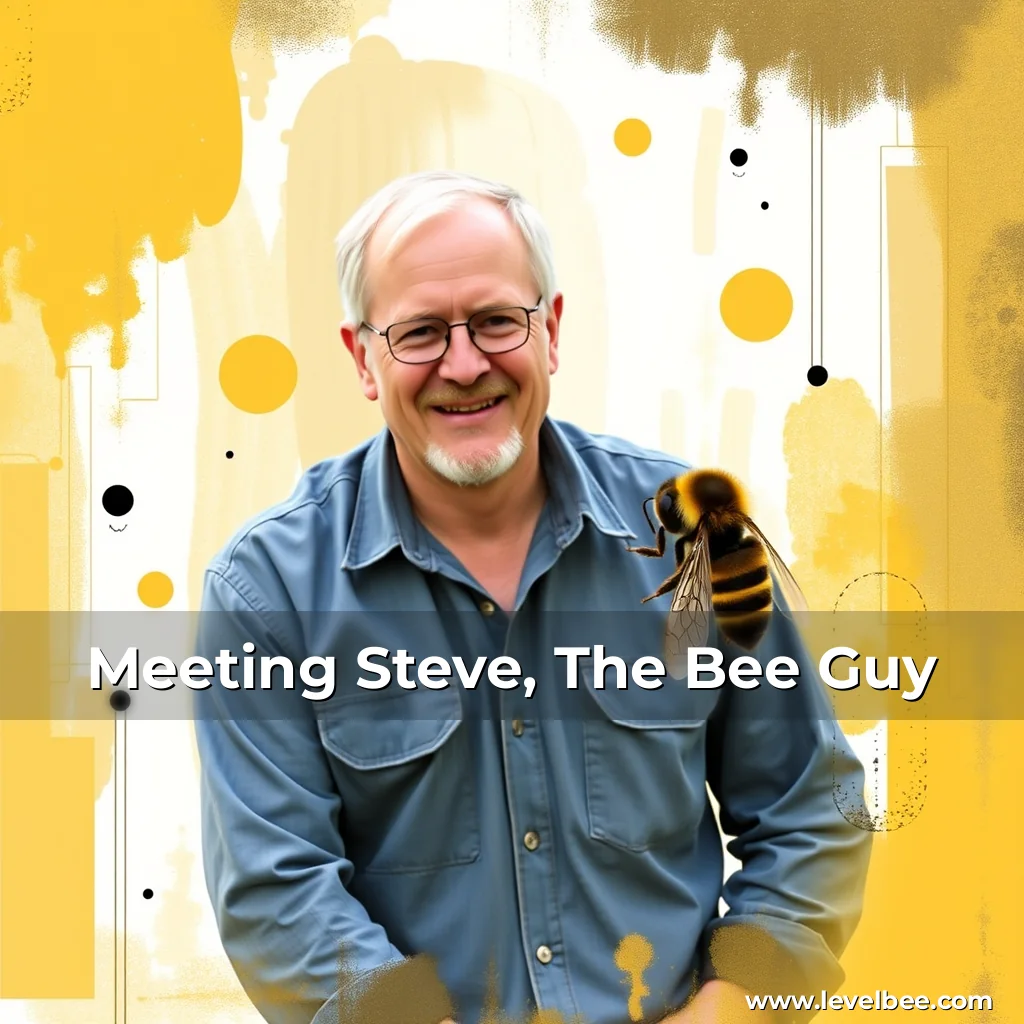
Steve Scanlan, also known as The Bee Guy, has a remarkable story to tell – one that combines his love for mason bees with his passion for writing and teaching. As a member of Food First Chemainus, I was thrilled to meet Steve for a chat about these incredible creatures at the Willow Street Café in Chemainus.
Steve is an avid writer of stories, a husband of many years, and a father of three daughters. But what sets him apart is his enthusiasm for mason bees. He co-authored a book with his wife Catherine, a guide for those interested in keeping these beneficial insects. Steve’s love affair with mason bees began when he met Eugene Fleck, a fellow bee enthusiast, about seven years ago.
“Eugene was a mason bee lover, and when he passed away, Steve and Catherine decided to carry on his mission. They’ve been spreading the word about the importance of mason bees in the Cowichan Valley ever since,” Steve explained.
But Steve’s passion for mason bees extends beyond his work with Food First Chemainus. He’s a writer of stories and is currently a student at Vancouver Island University in creative writing. He writes every day for pleasure and has even given fun, energetic lectures about mason bees to various groups.
One of the most interesting aspects of Steve’s conversation was his story about mason bees. He explained that these creatures have a remarkably short lifespan – only one to two weeks for males, and six to eight weeks for females. Despite this, they can significantly improve yields of fruit trees, spring flowers, and vegetables by three to six times.
“A mason bee looks like a big, fat fly,” Steve said with a chuckle. “They’re usually dark blue in this Pacific coastal region and are very, very fast fliers. They’re looking for holes to live in, and they have a stinger, but they don’t use it.”
The male mason bees mate as many times as they can and then die, usually after one to two weeks. The female lays two to four eggs a day, and she chooses the sex of each egg by deciding whether or not to fertilize it. She lays more females to ensure abundant reproduction next spring.
“One female will visit as many as 225 blooms to feed each egg, pollinating hundreds of flowers in just a few short weeks. Mason bees are very busy indeed. They’re some of the best pollinators, especially in early spring,” Steve explained.
So, how can we encourage mason bees to take up residence in our yards? Steve recommends providing a clean, dry quarter-inch hole in which to lay eggs, leave pollen to feed the developing larva, and build a mud wall. The bees will also use what’s available in your yard – old logs, lumber, reeds.
Steve designs and builds his own mason bee houses, and they can also be purchased from various suppliers. He sells his book, The Incredible Mason Bee, as well as bee houses, bees, and supplies at Catherine’s shop, The Blue Orchid/Magpies, on Willow Street in Chemainus.
| Key Facts |
|---|
| mason bees are solitary and build their nests in tunnels, creating a separate mud-walled chamber for each egg |
| male mason bees mate as many times as they can and then die, usually after one to two weeks |
| female mason bees lay two to four eggs a day, and choose the sex of each egg by deciding whether or not to fertilize it |
| one female mason bee visits as many as 225 blooms to feed each egg, pollinating hundreds of flowers in just a few short weeks |
By supporting Steve and Catherine’s work, you can help spread the word about the importance of mason bees in our community.

news is a contributor at LevelBee. We are committed to providing well-researched, accurate, and valuable content to our readers.