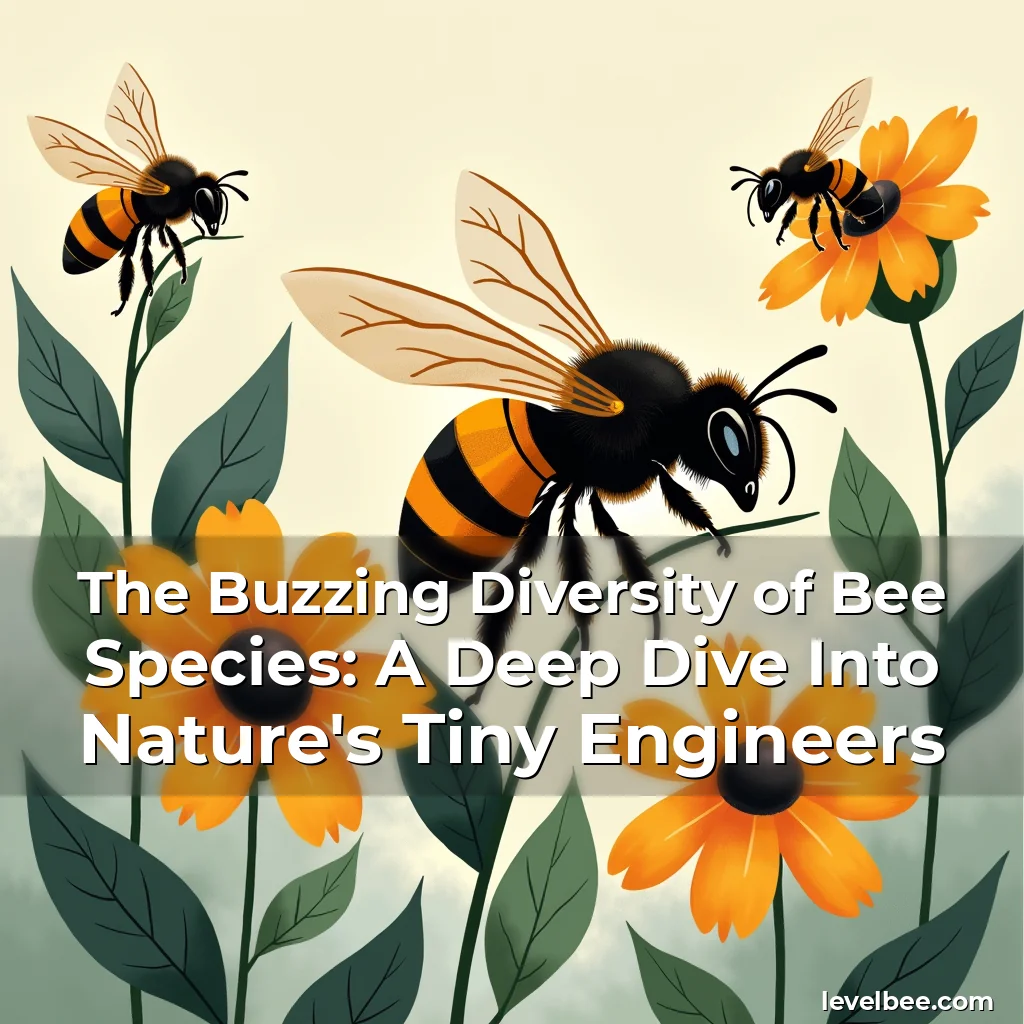
The Buzzing Diversity of Bee Species: A Deep Dive Into Nature’s Tiny Engineers
In an era where pollinators face unprecedented threats from habitat loss and pesticide use, understanding the remarkable diversity of bee species becomes crucial for conservation efforts. From the familiar honeybees that populate our gardens to the elusive orchid bees found only in tropical rainforests, each species plays a vital role in maintaining ecological balance.
This exploration delves into the fascinating world of bee taxonomy, uncovering how scientists classify these insects based on their morphology, behavior, and genetic makeup. By examining key characteristics such as body structure, nesting habits, and floral preferences, we gain insight into why there are over 20,000 known bee species worldwide.
Distinguishing Characteristics of Major Bee Families
Bee classification is rooted in evolutionary biology, revealing how different families have adapted to diverse environments across the globe. The Apidae family, which includes honeybees, bumblebees, and stingless bees, showcases striking variations in size, coloration, and social structures despite sharing common ancestry.
Members of the Andrenidae family exhibit distinct behaviors compared to other groups. These ground-nesting solitary bees often display specialized pollen collection techniques tailored to specific flower types they visit regularly during foraging trips.
The Megachilidae family stands out due to its unique leaf-cutter behavior. Bees within this group meticulously cut precise shapes from leaves using their mandibles before carrying them back to construct elaborate nests lined with plant material.
- Morphological differences: Honeybees typically measure around 12-16 mm in length with distinctive black-and-yellow striped abdomens, while carpenter bees can reach up to 25 mm with glossy black bodies.
- Nesting habits: Solitary bees prefer individual nest sites unlike eusocial species that live in colonies. This distinction influences their impact on local ecosystems through varying resource utilization patterns.
Examining the Halictidae family provides further insight into bee evolution. Known as sweat bees due to their attraction to human perspiration, these small insects demonstrate complex social systems ranging from completely solitary lifestyles to highly organized societies with caste divisions similar to ants.
The Colletidae family features some of nature’s most efficient architects. Their unique method of building cells by secreting wax-like substances allows them to create intricate brood chambers without requiring external materials like mud or leaves.
Each family represents millions of years of adaptation, shaping not only their own survival strategies but also influencing plant reproduction cycles globally. Understanding these distinctions helps researchers develop targeted conservation approaches for vulnerable populations facing environmental pressures today.
Taxonomic Classification and Evolutionary History
The scientific study of bees begins with taxonomic categorization, which organizes species according to shared traits and ancestral relationships. Modern classifications rely heavily on morphological analysis combined with molecular genetics to accurately determine phylogenetic connections among various genera and tribes.
Fossil evidence suggests that ancient ancestors of modern bees appeared approximately 120 million years ago during the Cretaceous period when flowering plants were diversifying rapidly alongside insect pollinators. This co-evolutionary relationship continues to shape contemporary ecosystems through mutualistic interactions between bees and angiosperms.
Phylogenetic trees constructed from mitochondrial DNA sequences reveal intriguing patterns regarding geographic distribution. For instance, certain lineages show strong affinities to specific regions like Australia or South America, indicating long-term isolation events that contributed to speciation processes.
The emergence of eusociality marks a significant milestone in bee evolution. While most bee species remain solitary, those belonging to the Apidae family developed complex colony organization characterized by cooperative brood care and division of labor among individuals.
Recent advances in genomic sequencing technology enable scientists to trace genetic mutations responsible for key adaptations such as improved flight efficiency or enhanced sensory capabilities useful for locating nectar sources at great distances.
Ongoing research continues to refine our understanding of bee phylogeny, identifying previously unrecognized species and reclassifying others based on new data sets derived from both fossil records and living specimens collected across various habitats worldwide.
Ecosystem Roles and Pollination Services
Bees serve as essential keystone species in nearly every terrestrial ecosystem, facilitating cross-pollination that supports food production and biodiversity maintenance. Through their visits to flowers, they transfer pollen between plants ensuring successful fertilization necessary for fruit development and seed formation.
The economic value of bee pollination services is immense, contributing billions of dollars annually to global agriculture industries. In particular, crops such as almonds, apples, and blueberries depend almost entirely on wild and managed bee populations for adequate yield levels.
Wildflower meadows benefit greatly from native bee activity since many species specialize in visiting specific plant genera rather than generalizing across numerous bloom types. This specialization enhances reproductive success rates for target flora through increased pollen deposition accuracy.
Urban landscapes can support thriving bee communities if designed thoughtfully with native vegetation and minimal pesticide application. Cities like Berlin and Portland have implemented green infrastructure projects aimed specifically at enhancing urban bee habitats through strategic planting schemes.
Conservation initiatives focused on preserving natural corridors connecting fragmented habitats help maintain healthy bee populations capable of supporting broader ecological networks reliant upon effective pollination mechanisms.
Climate change poses serious challenges to traditional pollination dynamics by altering phenological timing between plants and their respective pollinator partners. Such mismatches threaten both plant reproduction potential and overall ecosystem stability unless mitigated through adaptive management practices.
Habitat Requirements Across Different Bee Species
Understanding the specific habitat needs of various bee species informs better land management decisions that promote biodiversity preservation. Factors such as floral availability, nesting substrate quality, and microclimate conditions significantly influence population viability across different taxa.
Solitary bees generally require undisturbed areas rich in suitable nesting resources. Ground-nesting species like mining bees need loose soil devoid of excessive moisture whereas cavity-nesting forms may utilize hollow stems or pre-existing holes in wood for shelter.
Many tropical bee species depend on specific host plants for larval development, making habitat fragmentation particularly detrimental to their survival prospects. Conservationists working in biodiverse hotspots must prioritize protecting these critical botanical associations.
Managed apiaries provide artificial environments optimized for commercial honey production but often lack the complexity of natural habitats required by non-Apis bee species. Sustainable apiculture practices aim to address this imbalance by incorporating diverse forage options and reducing chemical inputs.
Seasonal fluctuations in temperature and precipitation affect nectar flow patterns, impacting food availability for developing larvae. Climate-resilient landscaping incorporates drought-tolerant flora and extended blooming periods to mitigate these effects on dependent pollinators.
Preserving deadwood components in forested areas benefits several bee species that rely on decaying timber for nesting purposes. This simple yet effective conservation strategy contributes positively toward sustaining regional pollinator populations.
Threats Facing Global Bee Populations
Modern agricultural intensification has dramatically altered landscapes, reducing the availability of diverse forage sources critical for optimal nutrition in many bee species. Monoculture farming practices limit floral variety, forcing pollinators to travel greater distances in search of sufficient sustenance.
Pesticide exposure remains one of the most pressing concerns affecting bee health worldwide. Neonicotinoid chemicals, widely used in crop protection programs, have been linked to impaired navigation abilities, reduced fertility rates, and heightened susceptibility to diseases among exposed populations.
Land-use changes driven by urban expansion and deforestation fragment habitats severely, isolating bee communities from potential mates and limiting access to essential nesting sites. Connectivity issues exacerbate genetic bottlenecks within isolated subpopulations.
Climate change-induced shifts in seasonal timing disrupt synchronized pollination events, leading to mismatched phenology between plants and their primary pollinators. Such temporal disconnects reduce reproductive success rates for affected flora.
Invasive species introductions pose additional risks by competing for limited floral resources or preying upon native bee populations. Managing biosecurity protocols becomes increasingly important in preventing unintended ecological consequences.
Combating these multifaceted threats requires integrated solutions combining policy reforms, habitat restoration efforts, and public education campaigns aimed at fostering appreciation for these ecologically invaluable creatures.
Conservation Strategies and Success Stories
Effective bee conservation hinges on implementing science-based strategies tailored to specific regional contexts. Collaborative efforts involving government agencies, academic institutions, and grassroots organizations have yielded promising results in recent years.
The European Union’s ban on neonicotinoids serves as a landmark regulatory action demonstrating commitment towards safeguarding pollinator populations against harmful agrochemical exposures. Similar measures are being considered in North American jurisdictions concerned about declining bee numbers.
Community-led initiatives promoting pollinator-friendly gardening practices have gained momentum globally, transforming private properties into mini-habitats supporting diverse bee species. Educational outreach programs teach residents about selecting appropriate native plants that attract beneficial insects.
Certified organic farms exemplify sustainable agricultural models prioritizing biodiversity conservation while maintaining productive yields. Reduced synthetic input usage fosters healthier ecosystems conducive to robust pollinator populations.
Restoration projects focusing on creating buffer zones along field edges enhance connectivity between isolated patches of suitable habitat, allowing bees to traverse larger territories effectively. These corridors function similarly to wildlife crossings designed for vertebrates.
Research-driven conservation plans incorporate citizen science contributions enabling real-time monitoring of population trends and distribution patterns. Mobile applications facilitate data collection from amateur observers participating in coordinated survey efforts.
Successful reintroduction programs targeting endangered species highlight the importance of captive breeding techniques combined with carefully planned release procedures under controlled conditions. These efforts contribute positively towards restoring depleted populations in their historical ranges.
The Future of Bee Research and Technology Integration
Rapid advancements in biotechnology offer exciting possibilities for deepening our understanding of bee biology and ecology. Genomic studies now allow researchers to identify genes associated with traits such as disease resistance or thermal tolerance, informing selective breeding programs aimed at improving resilience in domesticated stocks.
Remote sensing technologies equipped with multispectral imaging capabilities enable large-scale assessments of floral abundance and distribution patterns relevant to pollinator foraging activities. These tools assist in mapping high-value habitat zones worthy of conservation investment.
Artificial intelligence algorithms trained on behavioral datasets aid in predicting population dynamics influenced by changing climatic variables. Machine learning models simulate scenarios helping planners anticipate future challenges confronting pollinating insect communities.
Microchip tracking devices implanted in select bee populations provide unprecedented insights into migration routes, foraging range expansions, and colony movement patterns previously difficult to observe using conventional methods.
Collaborations between entomologists and engineers drive innovation in hive monitoring systems utilizing Internet of Things (IoT) sensors that transmit real-time data on temperature gradients, humidity levels, and swarm activity indicators remotely.
Virtual reality platforms immerse users in simulated environments replicating natural bee habitats, offering immersive educational experiences that foster deeper engagement with pollinator conservation issues through interactive storytelling formats.
These technological innovations collectively represent transformative steps forward in advancing knowledge acquisition and practical application related to bee species preservation efforts globally.
Conclusion
The incredible diversity of bee species underscores their indispensable role in sustaining life on Earth. As custodians of these precious natural assets, it falls upon us to protect their habitats and ensure their continued contribution to planetary well-being.
By adopting informed stewardship practices that respect ecological interdependencies, we empower ourselves to cultivate resilient ecosystems where both humans and bees thrive together harmoniously. Every garden planted with native flowers or every pesticide-free zone created represents progress toward securing a vibrant future for these extraordinary pollinators.

news is a contributor at LevelBee. We are committed to providing well-researched, accurate, and valuable content to our readers.