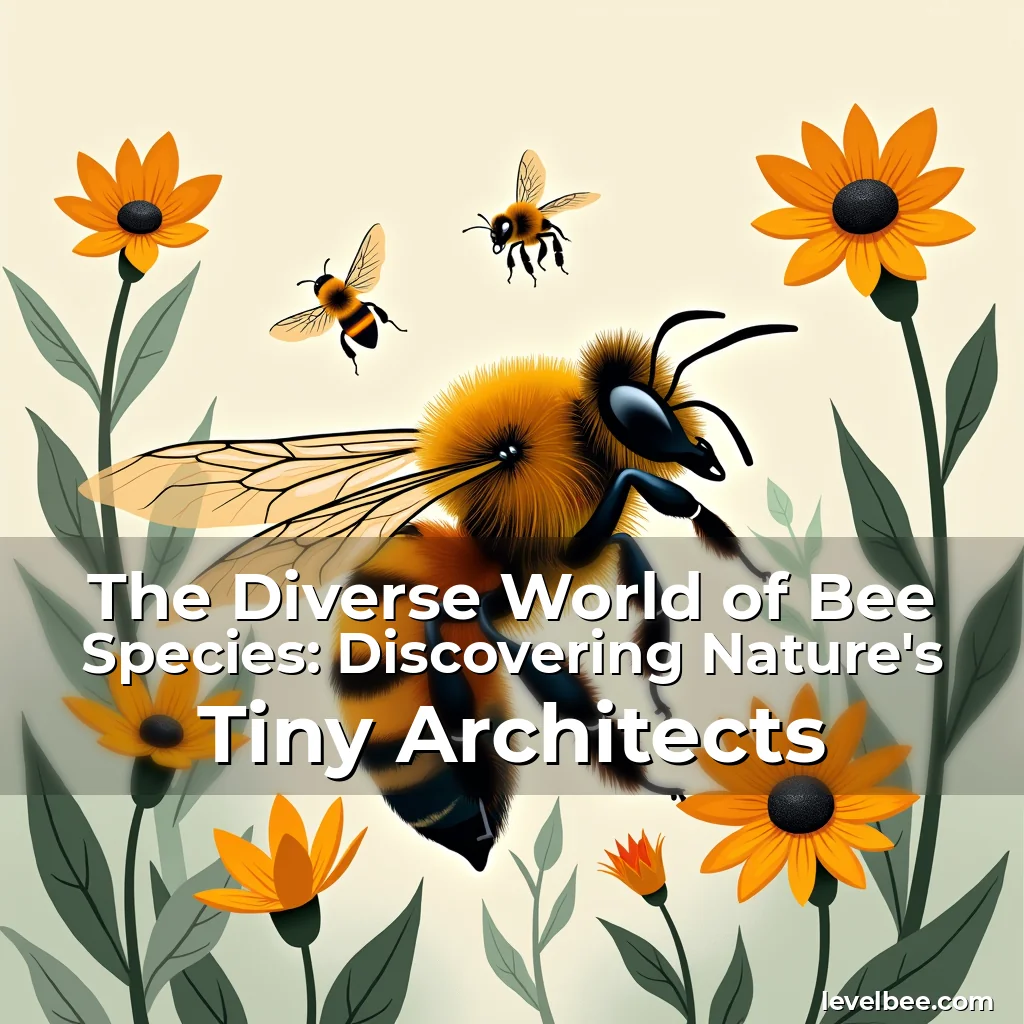
The Diverse World of Bee Species: Discovering Nature’s Tiny Architects
Beneath the fluttering wings of these tiny pollinators lies an astonishing world of diversity that shapes our planet’s ecosystems. With over 20,000 known species worldwide, bees range from familiar honeybees to lesser-known solitary varieties that play crucial roles in plant reproduction.
This exploration delves into the remarkable variety of bee species, their ecological significance, and how each contributes uniquely to biodiversity. From tropical rainforests to arid deserts, bees have adapted to every corner of Earth through millions of years of evolution.
Understanding the Global Diversity of Bees
The sheer number of bee species is staggering when considering their global distribution across different climates and habitats. While Europe hosts around 2,600 native species, South America alone contains nearly twice as many, highlighting regional variations in biodiversity.
Bees exhibit incredible specialization based on their environments, with some species thriving in temperate regions while others survive extreme conditions. This adaptability has allowed them to colonize diverse ecosystems ranging from coastal marshlands to high-altitude meadows.
American researchers estimate there are approximately 4,000 distinct bee species within North America alone, including both social and solitary types found in various landscapes. These numbers continue to grow as scientists discover new species annually through field studies and genetic analysis techniques.
In Southeast Asia, where biodiversity reaches its peak, entomologists identify thousands of endemic bee species that contribute significantly to local flora pollination networks. Such discoveries emphasize the need for continued research efforts in understudied areas.
The discovery process itself involves meticulous documentation using morphological comparisons alongside modern DNA sequencing technologies. These methods help distinguish between closely related species often indistinguishable by sight alone.
- Habitat specificity: Many bee species show strong preferences for particular vegetation types, influencing which plants they visit during foraging trips.
- Nesting behaviors: Some build intricate underground burrows while others utilize hollow stems or tree cavities for shelter.
- Pollination efficiency: Certain species excel at transferring pollen due to specialized body structures that maximize contact with flower parts.
- Mating strategies: Complex rituals involving scent marking and vibrational signals characterize interactions among male individuals seeking mates.
Ecological Roles and Interactions
As keystone species in most terrestrial ecosystems, bees facilitate cross-pollination processes essential for maintaining healthy plant populations. Their role extends beyond mere fertilization; they influence seed dispersal patterns and support food webs through indirect means.
Approximately 80% of flowering plants rely partially or fully upon insect pollinators like bees for successful reproduction cycles. This dependency underscores why preserving bee populations remains critical for sustaining agricultural productivity globally.
In addition to direct pollination services, bees act as natural indicators of environmental health. Declines in certain species can signal habitat degradation or pesticide misuse affecting broader wildlife communities.
Some rare bee species serve as primary pollinators for endangered plant species, creating mutualistic relationships vital for conservation programs aimed at protecting threatened botanical lifeforms.
Specific Examples of Ecologically Significant Bees
The Bombus terrestris, commonly known as the buff-tailed bumblebee, plays a pivotal role in pollinating crops such as tomatoes and strawberries in European agriculture. Its ability to regulate hive temperatures enables year-round activity even in cooler climates.
Meanwhile, the Megachile sculpturalis – also called the Asian wool carder bee – demonstrates exceptional nesting capabilities by collecting fibers from various sources to construct elaborate nests. Although non-native in several regions, it showcases adaptive traits useful for studying invasive species dynamics.
Research indicates that Xylocopa virginica, the carpenter bee, contributes substantially to wildflower pollination in eastern North American forests. Unlike honeybees, these larger insects do not produce honey but still maintain complex social structures within their colonies.
Detailed monitoring projects reveal that Osmia lignaria, or blue orchard mason bees, outperform honeybees in early spring pollination tasks thanks to their rapid development cycle and efficient nectar collection mechanisms.
Social vs Solitary Bee Species
One defining characteristic distinguishing bee species lies in their social organization – whether they live in structured colonies or function independently. Social bees typically form large groups with defined castes fulfilling specific duties within the colony structure.
Among the best-known examples are Apis mellifera, the Western honeybee, whose highly organized societies consist of worker bees, drones, and a single queen responsible for laying eggs. These complex hierarchies enable efficient resource management and survival under varying climatic conditions.
In contrast, solitary bees operate without hierarchical systems, with individual females constructing separate nests and provisioning food stores for their offspring before dying off after reproductive seasons conclude. This lifestyle reduces competition for resources but limits population growth potential compared to social counterparts.
There exist intermediate forms too, such as paper wasps belonging to the Vespidae family, which display semi-social behaviors combining elements of both solitary and eusocial lifestyles depending on environmental pressures faced by different generations.
- Colony size variation: Honeybee hives may house up to 80,000 workers simultaneously, whereas solitary nests usually contain only one female adult per unit space.
- Lifespan differences: Worker honeybees typically live six weeks during active seasons, while many solitary species complete entire lifecycles within months rather than years.
- Nest construction: Social bees invest considerable energy building wax combs and defending territories against predators, unlike solitary bees who focus primarily on gathering provisions quickly.
- Reproductive investment: Queens dedicate almost all energy towards egg production, while solitary females balance parenting responsibilities with personal survival needs.
Adaptations for Survival and Foraging
Millions of years of evolutionary refinement have equipped bee species with extraordinary adaptations enabling them to thrive in vastly differing environments. Specialized mouthparts allow precise manipulation of floral structures necessary for effective nectar extraction.
Certain species possess elongated tongues capable of reaching deep into tubular flowers inaccessible to other pollinators. The length varies dramatically, with some having proboscises extending over three times longer than their body sizes.
Color vision abilities differ significantly among species; while humans perceive only three basic colors, many bees see ultraviolet light wavelengths revealing hidden markings on petals used as navigational guides during foraging excursions.
Body hair configurations vary according to dietary requirements – fine hairs enhance pollen collection efficiency, while dense bristles aid in transporting heavier substances like oils secreted by specific plant species.
Wings demonstrate remarkable versatility too, featuring venation patterns optimized for either swift aerial maneuvers or prolonged hovering near blossoms rich in nectar rewards.
Temperature regulation mechanisms further exemplify adaptive complexity, particularly evident in cold-climate specialists employing shivering muscles to generate internal heat required for flight initiation at low ambient temperatures.
Threats Facing Bee Populations Worldwide
Despite their ecological importance, numerous factors threaten bee species’ survival rates across continents. Habitat loss due to urban expansion and intensive farming practices disrupts traditional foraging grounds and nesting sites previously abundant in undisturbed landscapes.
Pesticide use, especially neonicotinoids, poses significant risks by impairing navigation abilities and reducing overall longevity among exposed individuals. Studies indicate exposure levels above safe thresholds correlate strongly with increased mortality events observed in monitored populations.
Climate change introduces additional challenges by altering phenology patterns – timing mismatches occur when emerging adults find insufficient blooming periods aligning with their developmental schedules, leading to starvation or failed reproduction attempts.
Invasive species sometimes displace native pollinators through competitive exclusion principles, where superior resource utilization leads to gradual decline in less adaptable indigenous populations unable to compete effectively.
Disease transmission becomes another concern following large-scale monoculture implementations that increase vulnerability to pathogens spreading rapidly through densely populated apiaries maintained under artificial conditions.
Conservation initiatives now prioritize restoring degraded habitats while promoting sustainable land-use policies minimizing chemical inputs harmful to beneficial arthropods playing key roles in ecosystem stability.
Notable Bee Species Around the Globe
Each continent harbors unique bee species exhibiting fascinating biological characteristics worthy of recognition. In Africa, the Africanized honeybee presents an intriguing case study demonstrating hybrid vigor resulting from interbreeding between European and African subspecies introduced decades ago.
South America boasts impressive diversity with over 900 recorded species inhabiting varied biomes, including the striking green sweat bee (Agapostemon) displaying iridescent metallic coloration attracting attention from nature enthusiasts worldwide.
Asian countries showcase spectacularly adorned species like the golden-haired bee (Amegilla cingulata), renowned for its distinctive yellow abdominal bands contrasting sharply against black thoracic segments.
European landscapes provide ideal habitats for the common carder bee (Bombus pascuorum), identifiable by its rusty red-brown coloring making it easily distinguishable from similar-looking relatives encountered elsewhere.
North America features charismatic representatives such as the fuzzy-footed bee (Anthophora bomboides), notable for its exceptionally soft pilosity covering legs and abdomen surfaces contributing to enhanced pollen transport capacities.
Antarctic regions host hardy species adapting remarkably well despite harsh polar conditions, although fewer documented cases exist owing largely to logistical difficulties associated with conducting thorough surveys in remote locations.
Conservation Efforts and Future Outlook
Ongoing scientific investigations aim to better understand declining trends impacting bee populations globally, focusing particularly on identifying causal factors behind recent mass die-offs reported in various geographic regions.
Protective measures include establishing protected areas designated specifically for pollinator preservation, implementing buffer zones around sensitive habitats, and encouraging agroecological approaches integrating native plants into cultivated fields enhancing landscape connectivity.
Educational campaigns raise awareness regarding simple actions individuals can take daily, such as planting diverse flowering gardens providing continuous nectar sources throughout seasons rather than relying solely on annual bloom cycles.
Collaborative international agreements now address transboundary issues threatening migratory species requiring coordinated conservation strategies spanning multiple jurisdictions experiencing overlapping ecological concerns.
Technological advancements offer promising solutions through precision agriculture techniques reducing unnecessary herbicide applications and supporting integrated pest management protocols favoring natural enemies over synthetic alternatives.
Community-based monitoring programs empower citizen scientists participating actively in data collection efforts tracking local abundance fluctuations helping inform policy decisions concerning land-use regulations affecting pollinator habitats critically.
Conclusion
The intricate tapestry woven by countless bee species reflects nature’s ingenuity in designing organisms perfectly suited for their respective niches. Every buzzing sound heard amidst vibrant blooms signifies ongoing processes sustaining planetary biodiversity.
By recognizing the value embedded within these small yet mighty creatures, we become stewards committed to ensuring future generations inherit a world teeming with life supported by resilient pollinator networks functioning harmoniously with human activities shaping contemporary landscapes.

news is a contributor at LevelBee. We are committed to providing well-researched, accurate, and valuable content to our readers.