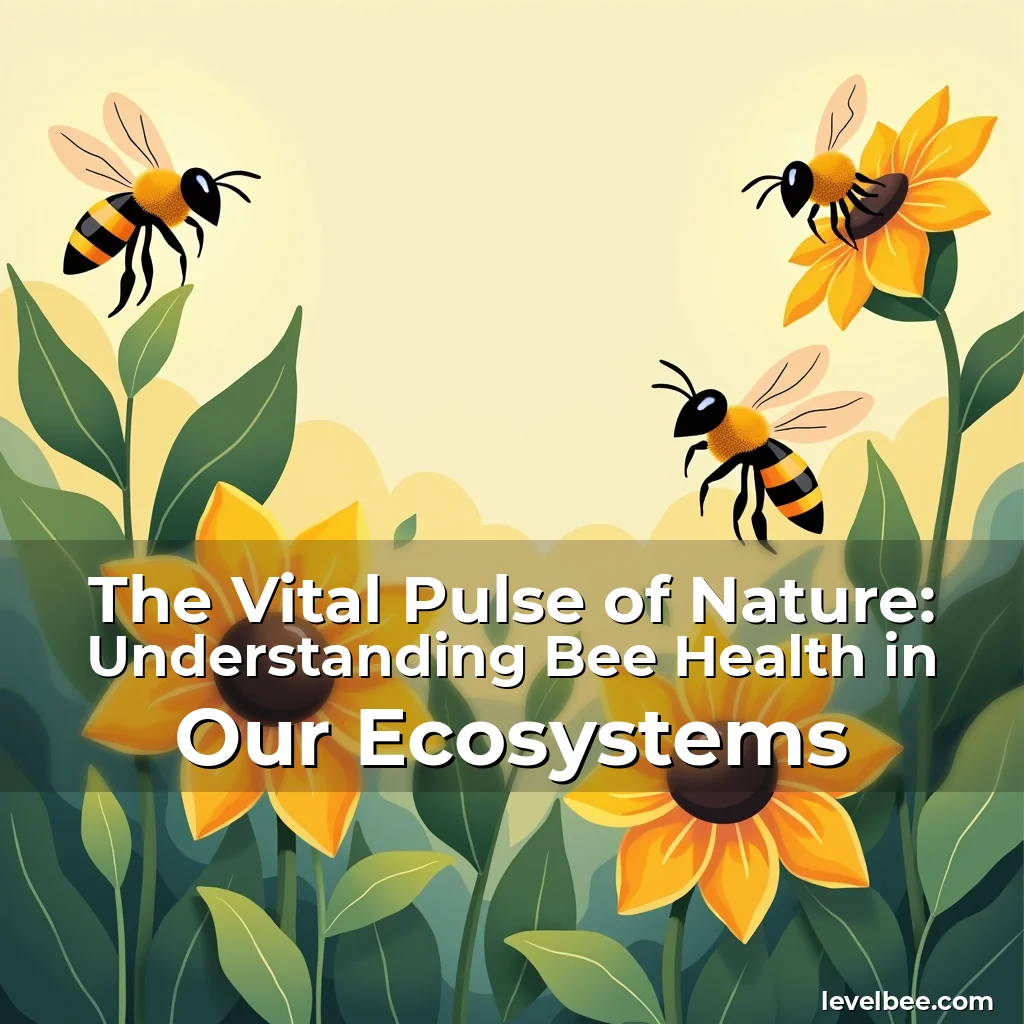
The Vital Pulse of Nature: Understanding Bee Health in Our Ecosystems
Bee health is not merely an issue confined within hives; it’s a critical indicator of our planet’s overall ecological balance. As pollinators responsible for nearly one-third of global food production, bees play an essential role that extends far beyond their buzzing presence.
From the vibrant flower gardens of suburban neighborhoods to vast agricultural landscapes, healthy bee populations ensure biodiversity thrives while supporting human sustenance through crop pollination. Their well-being reflects broader environmental conditions affecting everything from plant life to climate change resilience.
Ecological Significance of Bees
Bees are nature’s most efficient pollinators, facilitating reproduction in over 80% of flowering plants worldwide. This process underpins ecosystems by ensuring seed dispersal and fruit development across diverse habitats ranging from tropical rainforests to arctic tundras.
Their impact transcends mere aesthetics; approximately 75% of global crops depend partially or entirely on animal pollination services provided primarily by bees. Without these tiny architects of biodiversity, entire food chains would collapse along with agricultural productivity.
- Pollinator Diversity: Over 20,000 known species exist globally, each adapted uniquely to different environments and flowers.
- Economic Value: The economic value attributed to insect pollination exceeds $265 billion annually according to FAO estimates.
Threats Facing Modern Bee Populations
Modern industrial agriculture has created significant challenges for wild and managed bee colonies alike. Pesticide use, habitat fragmentation, and monoculture farming practices have dramatically altered natural landscapes where bees once flourished freely.
Neonicotinoid pesticides pose particular threats due to their systemic absorption within plants which makes them present in nectar and pollen consumed daily by worker bees. These chemicals disrupt neural pathways crucial for navigation and foraging behaviors.
Habitat loss exacerbates these issues further as urban expansion reduces floral diversity available during critical periods when bees require nourishment sources rich in protein and carbohydrates.
Climatic changes also influence seasonal patterns affecting bloom times mismatched with traditional foraging cycles, creating additional stressors on already vulnerable populations.
Colonies Under Siege: Colony Collapse Disorder
Colony Collapse Disorder (CCD) remains one of the most perplexing phenomena observed among honeybee populations since its identification around 2006. Unlike typical colony losses associated with disease outbreaks or predator attacks, CCD involves sudden disappearances of adult worker bees leaving behind intact brood and ample food stores.
While exact causes remain elusive, researchers suspect complex interactions between pathogens such as Nosema ceranae fungus, Varroa destructor mites, and exposure to agrochemicals contribute significantly to this phenomenon.
Environmental factors including electromagnetic radiation from cell towers and microwave ovens have been proposed but lack conclusive scientific validation regarding direct causation links.
Mitigating Factors Identified Through Research
Studies indicate improved hive management techniques can reduce susceptibility rates among affected colonies. Regular inspections combined with targeted treatments against varroa mites show promising results in maintaining healthier apiaries.
Data collected from monitored apiarists suggests implementing buffer zones around farms with pesticide applications helps minimize chemical drift reaching nearby hives. Such measures create safer corridors for pollinators moving between feeding sites.
Nourishing Bees: Forage Quality and Nutritional Needs
Adequate nutrition forms the foundation upon which robust immune systems develop in both wild and domesticated bee populations. Diverse floral resources provide essential micronutrients absent in single-species diets commonly found near monocultures.
Phytochemical compounds derived from various blossoms enhance cognitive functions related to memory retention necessary for successful foraging trips spanning several kilometers daily.
Urban beekeepers often supplement feedings using sugar syrups enriched with amino acids mimicking natural nectars composition. However excessive reliance on artificial feeds may compromise gut microbiota diversity vital for digestion processes.
Pathogens & Parasites Affecting Bee Health
Diseases transmitted through contaminated equipment or infected individuals represent another formidable challenge facing contemporary apiculture efforts. Viruses such as Israeli Acute Paralysis Virus (IAPV) spread rapidly within densely populated apiary settings.
Varroa destructor mites act as vectors transmitting numerous viruses simultaneously while weakening host defenses against other potential infections. Effective control strategies involve regular monitoring coupled with selective miticides approved specifically for apicultural use.
Fungal infestations like chalkbrood caused by Ascosphaera apis thrive under high humidity levels prevalent inside poorly ventilated hives. Proper spacing between colonies improves airflow circulation reducing microclimate risks.
Antimicrobial resistance emerging from repeated antibiotic usage necessitates developing alternative treatment protocols focused on strengthening innate immunity rather than relying solely on synthetic drugs.
Sustainable Practices Supporting Healthy Apiaries
Adopting integrated pest management approaches minimizes dependency on chemical interventions thereby preserving beneficial microbial communities residing within beehives. Natural predators introduced strategically help regulate harmful insect populations without disrupting native fauna balances.
Planting pollinator-friendly gardens incorporating native flora provides supplemental food sources especially during early spring when natural blooms might still be scarce. Community initiatives promoting green spaces benefit local wildlife beyond just bee populations.
Reducing plastic waste generated from packaging materials used in commercial beekeeping operations supports cleaner environments less likely to harbor contaminants detrimental to sensitive organisms like bees.
Supporting organic certification programs encourages farmers to adopt environmentally friendly cultivation methods minimizing toxic residues left behind after harvest seasons.
The Role of Citizen Science in Monitoring Bee Populations
Engaged citizens equipped with basic observational skills can contribute meaningfully towards long-term studies tracking population trends across geographic regions. Mobile apps designed for data collection enable users to log sightings systematically contributing real-time information invaluable for research purposes.
Participation in citizen science projects fosters greater public awareness concerning conservation needs while empowering individuals take proactive steps improving local habitats suitable for pollinator survival.
Local governments increasingly recognize importance placed on community involvement leading policies aimed at expanding protected areas designated exclusively for pollinator preservation activities.
Future Directions for Bee Conservation Efforts
Innovative technologies offer new possibilities enhancing current methodologies employed in protecting endangered bee species. Drone-assisted mapping identifies optimal locations suitable for establishing new nesting grounds based on vegetation indices analyzed remotely.
Genomic sequencing advances facilitate understanding genetic variations influencing resilience traits observable among surviving populations exposed repeatedly to environmental stressors. Selective breeding programs aim cultivating strains better adapted withstand future climatic fluctuations predicted by meteorological models.
International collaborations foster knowledge sharing accelerating implementation of best practices proven effective elsewhere globally. Shared databases containing historical records assist scientists predicting possible outcomes stemming from proposed policy adjustments impacting pollinator welfare.
Education campaigns targeting youth audiences instill appreciation values encouraging lifelong commitments towards safeguarding fragile ecosystems dependent heavily upon functional pollination networks maintained successfully by thriving bee communities.
Conclusion
Bee health serves as both barometer measuring planetary wellness and keystone factor determining sustainability prospects for countless species reliant indirectly or directly upon these industrious insects.
By adopting multifaceted strategies encompassing habitat restoration, reduced pesticide application, supportive legislation frameworks, and active participation from concerned citizens, we collectively reinforce foundations required sustaining healthy bee populations capable fulfilling their indispensable roles indefinitely.
“`

news is a contributor at LevelBee. We are committed to providing well-researched, accurate, and valuable content to our readers.