The Perfect Storm
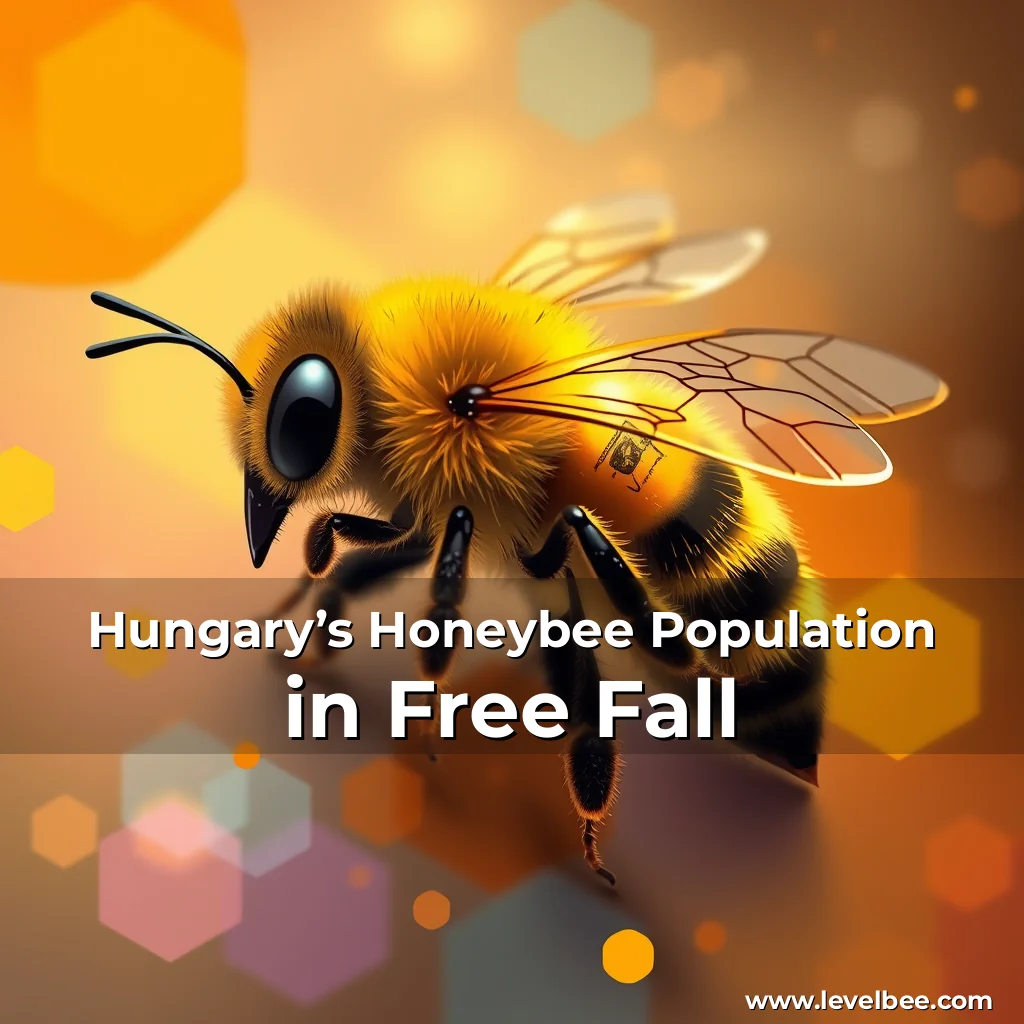
Since winter 2023, Hungary’s beekeepers have witnessed a catastrophic collapse, losing 50% of their colonies. A bitter cold snap in April 2024 further crippled recovery by damaging two-thirds of the acacia forests critical for spring pollination.
“The acacia’s buds turned black, and the expected blooms never came,”
stated Péter Bross, president of the National Hungarian Beekeeping Association, describing hillsides stripped of their floral lifeline. Compounding these ecological blows, Hungarian beekeepers now compete with honey from Ukraine and China, where imports undercut domestic prices by as much as 80%.
Environmental Threats
The bee decline isn’t confined to Hungary. Globally, bee populations have seen alarming losses attributed to pesticides like neonicotinoids — banned in parts of the EU — and the parasitic varroa mite.
- Germany’s recent suspension of certain pesticides in response to massive bee die-offs underscores a broader environmental reckoning.
- The climate events further disrupt delicate ecosystems.
- Acacia trees, a cornerstone of Hungarian beekeeping, are exquisitely sensitive to temperature shifts.
Global Market Pressures
The crisis is as much about economics as ecology. China, the world’s largest honey producer, floods global markets with products sometimes cut with sugar syrups.
- A 2023 study by Beijing’s Institute of Apicultural Research admitted practices of “sugar adulteration for higher profits.”
- In the U.K., lab tests on supermarket honeys revealed 89% of samples showed signs of tampering.
Advocacy and Proposed Solutions
The U.K.’s Honey Authenticity Network UK is pushing for stricter labeling to combat deceptive blends.
“Consumers deserve to know if their honey is adulterated,”
argued Lynne Ingram. Organic beekeeping practices are also gaining attention, which avoids pesticides and fosters ecosystem resilience.
Uncertain Future
Hungary’s bee collapse serves as an alarm bell for global food security. From Polish apiaries to California’s almond orchards, pollinator decline threatens ecosystems and economies alike.
“Without action, farming honey could become a hobby, not a livelihood,”
warned Krisztian Kisjuhasz, a Hungarian beekeeper.
a parasitic insect that infests bee colonies, weakening them.
a class of pesticides banned in parts of the EU for their impact on bee populations.
a type of tree that provides critical nectar for honey production.

news is a contributor at LevelBee. We are committed to providing well-researched, accurate, and valuable content to our readers.